Your child’s vision plays a crucial role in their development, learning, and overall quality of life. However, many parents wait until their child complains about vision problems or struggles in school before considering eye care.
Regular pediatric eye exams are important because children often lack the experience to realize that they have vision problems. This means that regular exams can help identify issues early.
Why Your Child Needs Regular Eye Exams
Early Detection Prevents Long-Term Problems
Children typically don’t know what normal vision looks like. If they’ve always seen the world a certain way, they assume that everyone else’s vision is the same.
Catching vision problems early allows us to address them promptly, often before they can get worse. Early intervention can save your child from years of struggling with unclear vision.
Vision Affects Learning & Development
A significant portion of children’s learning relies on vision. When vision problems go undetected, this can significantly impact your child’s academic performance and development.
Common learning challenges linked to vision problems include:
- Reading difficulties
- Poor classroom focus
- Trouble with physical activities & sports
- Delays in recognizing colours, shapes & letters
Social & Emotional Benefits
When children can see clearly, they’re more likely to engage in sports, games, and social interactions. Clear vision helps your child participate confidently in activities with friends and classmates.
Good vision also supports emotional development by helping children read facial expressions and social cues accurately. This contributes to healthier relationships with peers and family members.
When to Schedule Your Child’s First Eye Exam
Recommended Timeline for Eye Exams
We recommend following a regular exam schedule to monitor your child’s vision development:
- First exam before 2 years of age
- Second exam between 2–5 years old
- Annual exams once they start school
This timeline aligns with professional guidelines for children’s eye health and helps us track normal development and catch any issues before they impact your child’s daily activities.
Signs Your Child May Need an Eye Exam Sooner
Watch for these warning signs that might indicate vision problems:
- Frequent eye rubbing or blinking
- Sitting too close to TV or books
- Squinting regularly
- Complaining of headaches or tired eyes
- One eye pointing in a different direction
- Difficulty with reading or schoolwork
If you notice any of these symptoms, schedule an appointment even if it’s not time for your child’s regular exam.
What Happens During a Pediatric Eye Exam
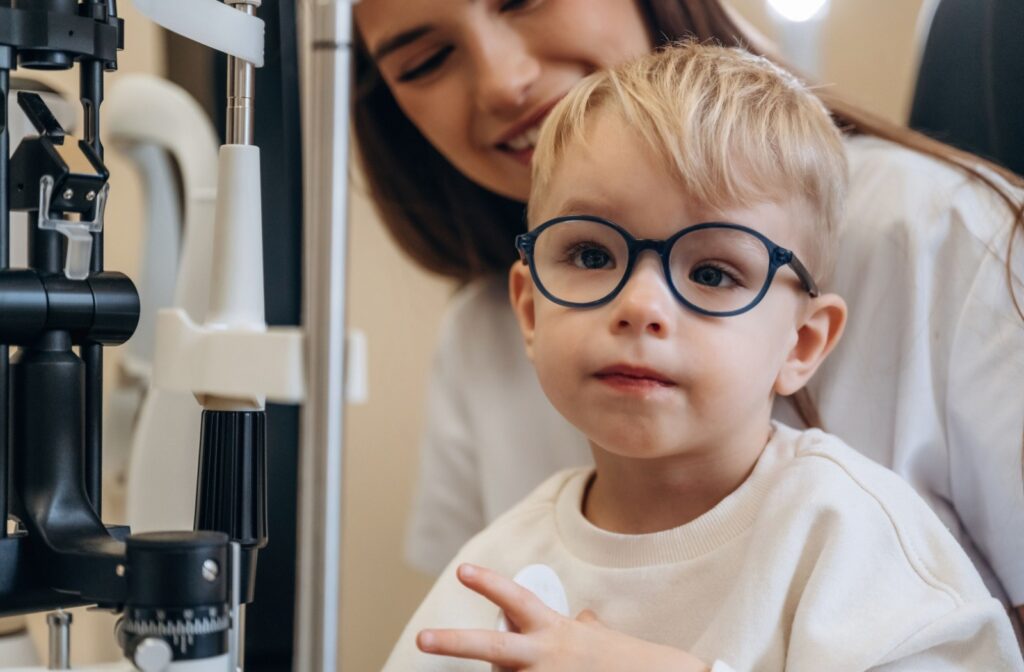
Vision Tests for Different Ages
As part of our exams, we use techniques designed for children at different developmental stages. For instance, for babies and toddlers, we observe how their eyes move and respond to light and objects.
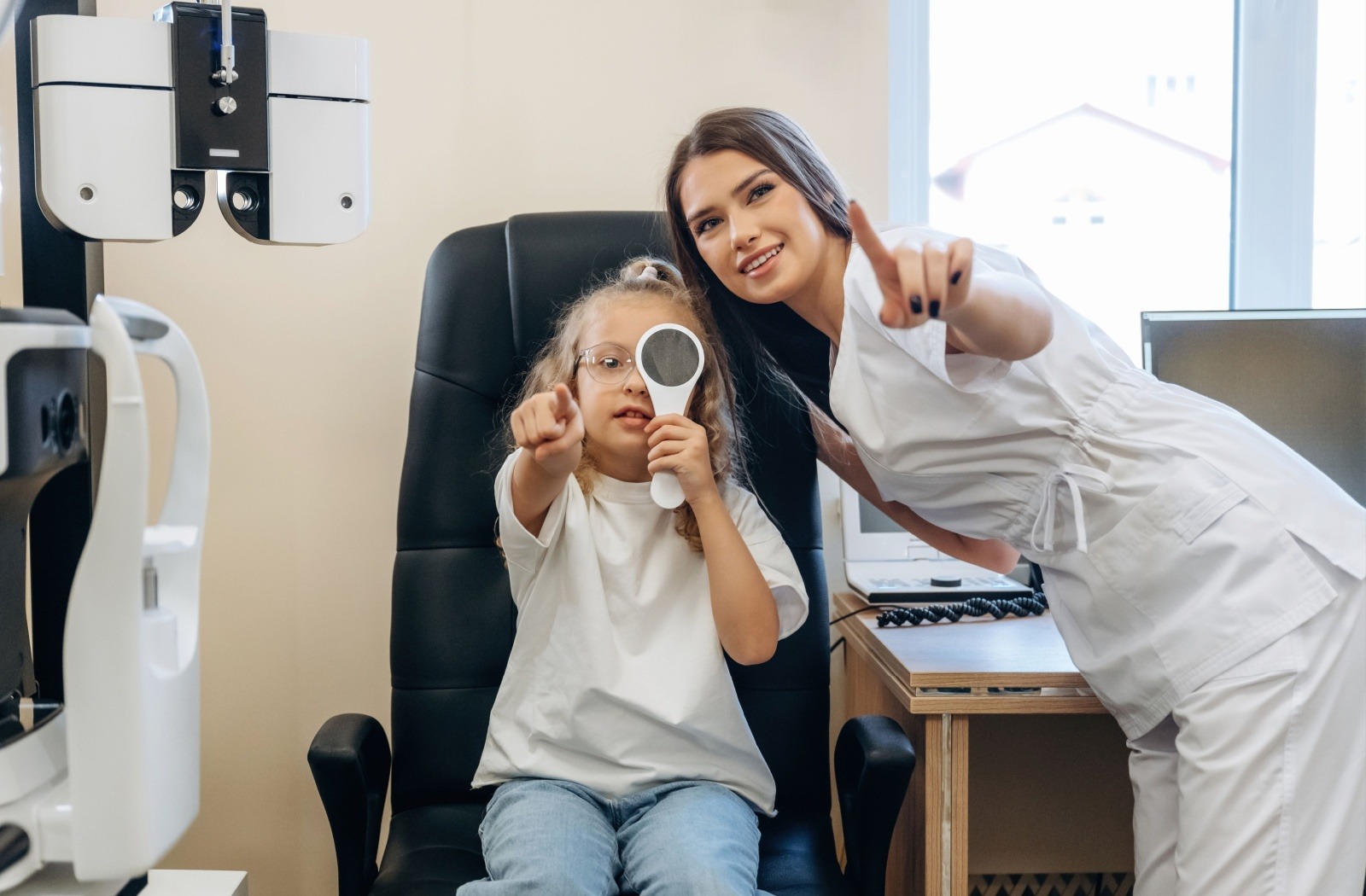
Older children can participate in more interactive vision tests that feel like games rather than medical procedures. This helps keep them comfortable and engaged throughout the exam.
Key Areas We Examine
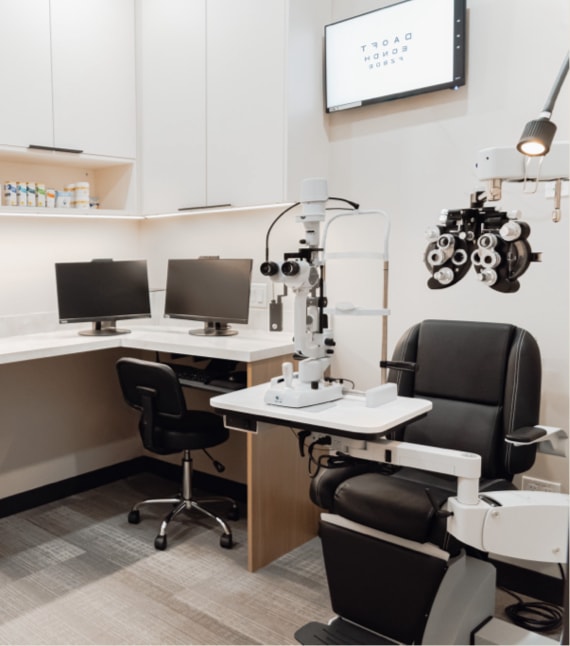
During your child’s eye exam, we thoroughly assess several important aspects of their vision:
- Visual acuity at near & far distances
- Eye alignment & coordination
- Focusing abilities
- Eye tracking skills
- Overall eye health
Each of these areas plays a vital role in how well your child can see and process visual information.
Tests for School-Age Children
For children already in school, we can perform additional assessments that evaluate how their vision may affect their reading, learning, and sports performance. These tests help us identify any vision-related learning challenges.
We also check how well your child’s eyes work together as a team.
Common Vision Problems in Children
Refractive Errors
Myopia (nearsightedness), hyperopia (farsightedness), and astigmatism are common in children. These conditions occur when the eye doesn’t focus light properly on the retina, a tissue at the back of the eye.
The good news is that glasses can easily correct these problems, helping your child see clearly at all distances.
Amblyopia (Lazy Eye)
This condition happens when one eye doesn’t develop normal vision, even with glasses. Early detection and treatment are key to helping both eyes develop properly.
Treatment often involves teaching the weaker eye to work harder.
Strabismus (Crossed Eyes)
When the eyes don’t align properly, this can cause double vision and interfere with depth perception. This is called strabismus. Some children develop this condition as babies, while others develop it later.
Treatment options vary depending on severity and can include glasses, eye exercises, or other interventions to help the eyes work together.
Myopia Management
Nearsightedness is becoming especially common in children, partly due to increased screen time and less outdoor activity. We offer treatments designed to slow the progression of myopia.
These approaches can help reduce how much your child’s prescription changes over time, potentially preventing more serious eye problems later in life.
How to Keep Your Child’s Eyes Healthy
Protect Eyes from Sun & Injury
UV rays can damage your child’s eyes. Make sure your child wears sunglasses with UV protection when playing outside.
For sports and active play, protective eyewear can prevent injuries that might affect their vision permanently.
Manage Screen Time Wisely
Encourage your child to follow the 20-20-20 rule: every 20 minutes, look at something 20 feet away for 20 seconds. This gives their eyes a break from focusing on close-up screens.
Outdoor play for at least two hours daily can also help reduce the risk of developing myopia and supports overall eye health.
Find an Optometrist in Calgary SW
Building a relationship with a local optometrist in Calgary SW helps establish healthy vision habits that can last a lifetime. Regular check-ups make eye care a normal part of your family’s health routine.
Having a trusted eye care provider nearby also means you can address any concerns quickly when they arise.
At Eye Care Studio, we understand that every child is different, and we tailor our approach to make each visit comfortable and positive. Our experienced team can help protect your child’s vision and support their development through comprehensive, family-friendly eye care. Contact us today to schedule your child’s next eye exam and take an important step toward their lifelong eye health.